Oceanography has a CTD Lead Time Problem
The Oceanographic Community studies the Earth’s Oceans providing critical information about our planet. They require Fast CTD Delivery & Calibration. In order to do so, they deploy on research ships, and use other platforms to gather data from the World’s Oceans. Allowing humanity a glimpse into what covers most of our globe. These ships cost huge money to take out to sea and are typically on a schedule for deployment. Climate Researchers are already in a race against time with the ever-increasing changes in the climate. Therefore, we aim to deliver quickly to speed up the logistics. No one wants to hold up a ship deployment waiting for equipment.
Over the past few years, D-2 Inc. has attended numerous conferences. During these events, a primary concern voiced by CTD end users was the lengthy lead times for both order fulfillment and calibration. In fact, many have expressed that obtaining CTDs, delivered and calibrated promptly to meet deployment schedules, is nearly impossible. Currently, our main competitor reportedly requires over 14 weeks for new equipment delivery and a similar timeframe for calibration turnarounds. Consequently, this creates significant challenges for oceanographers striving to assemble equipment for scheduled deployments. For example, imagine the disruption caused by having to delay a research vessel at the docks due to a 14-week CTD calibration delay. Recognizing this pressing issue, many end users have approached D2 seeking a solution, which we are confident we can provide.
Fast New CTD and CT Delivery Times
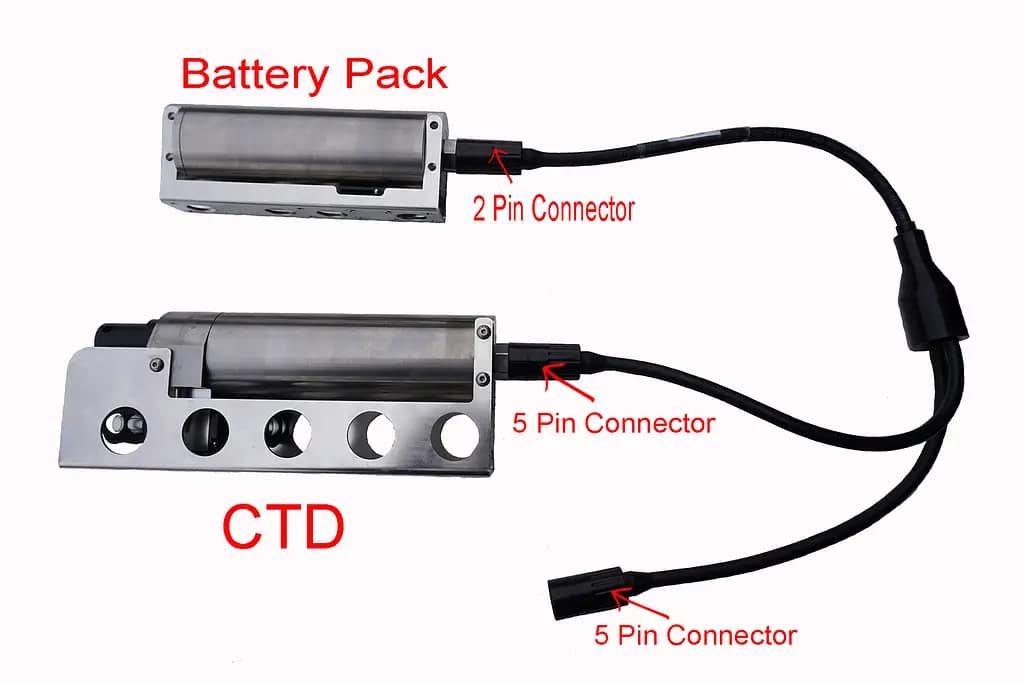
Fast CTD Delivery Calibration for the Oceanographic Community
D-2 Incorporated has been improving our manufacturing process for CTDs and CTs and stocking long lead time parts of the assembly. Thus, we dropped our delivery times from 12 to 16 weeks after order now down to 4-8 weeks after order. We can build standard depths and standard CTD in four weeks or fewer. This makes D2 the fastest delivery times in the world currently for providing CTDs or CT for measurement of Ocean Salinity, pressure and temperature.
We offer a full range of conductivity, temperature and depth sensors. Conductivity and temperature are how you derive salinity. You can strap our sensors onto any platform with no need for additional calibration because our cell is a closed field. This allows our CTD to provide closed field accuracy but also has small low power designs that use flow through measurements. For more details on our CTD’s visit to the webpage here: https://www.d-2.com/hybrid-ctd-ocean/
Accurate and Quick CTD Calibration Lab
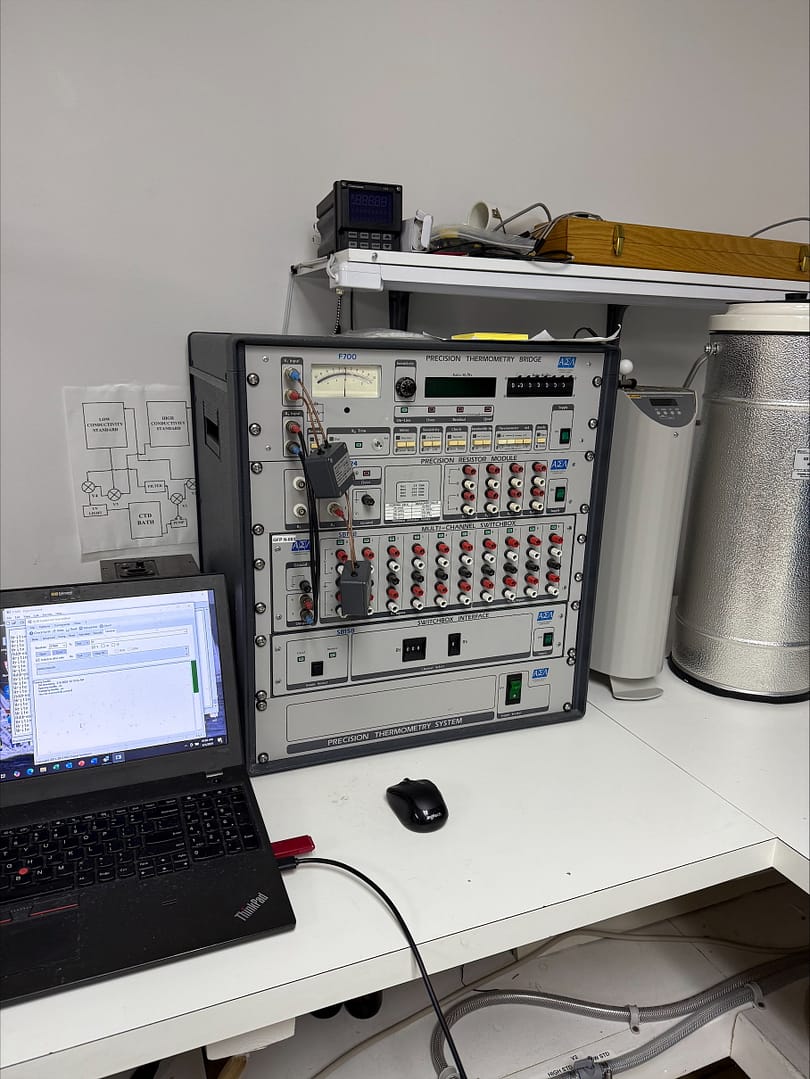
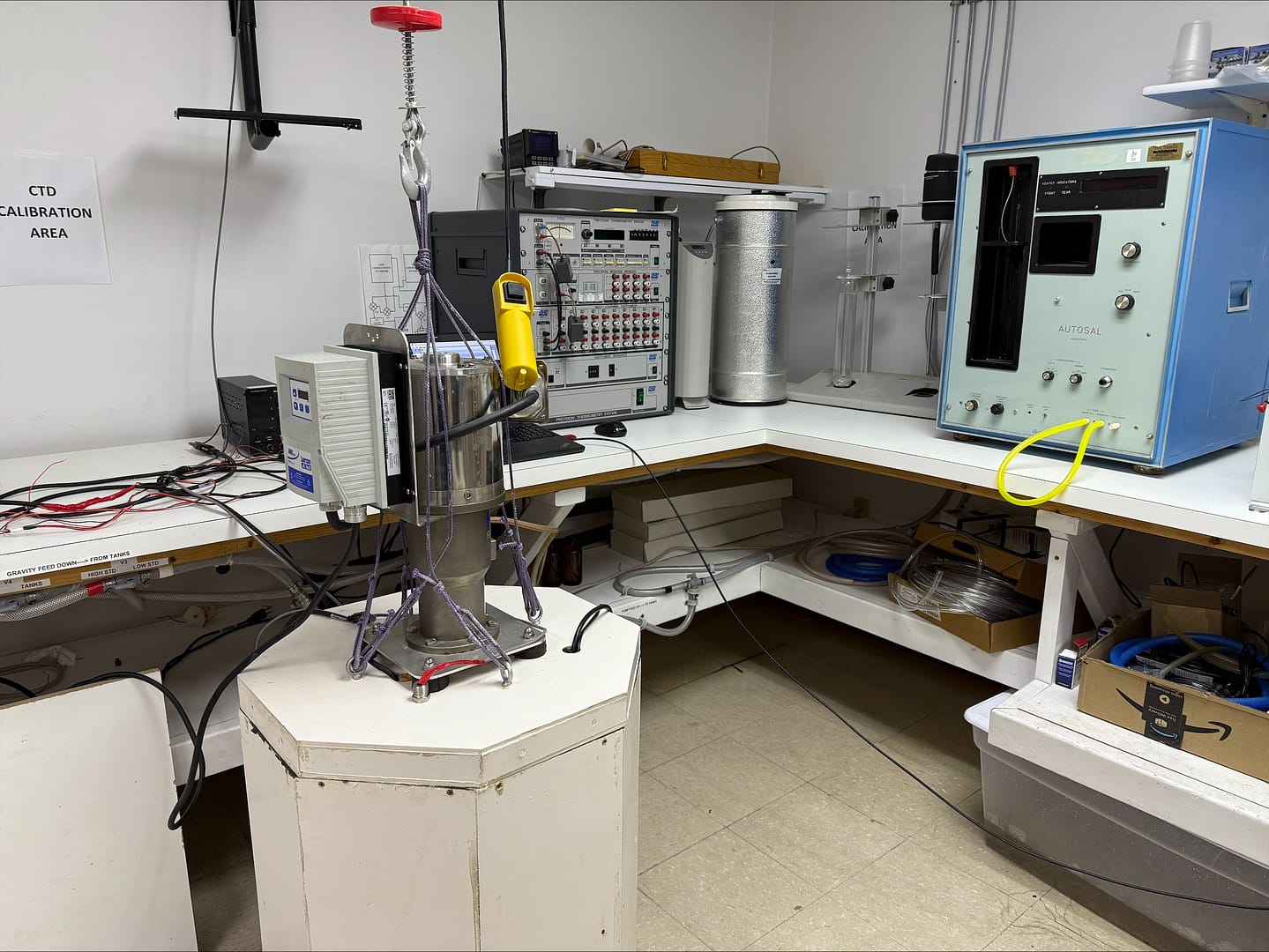
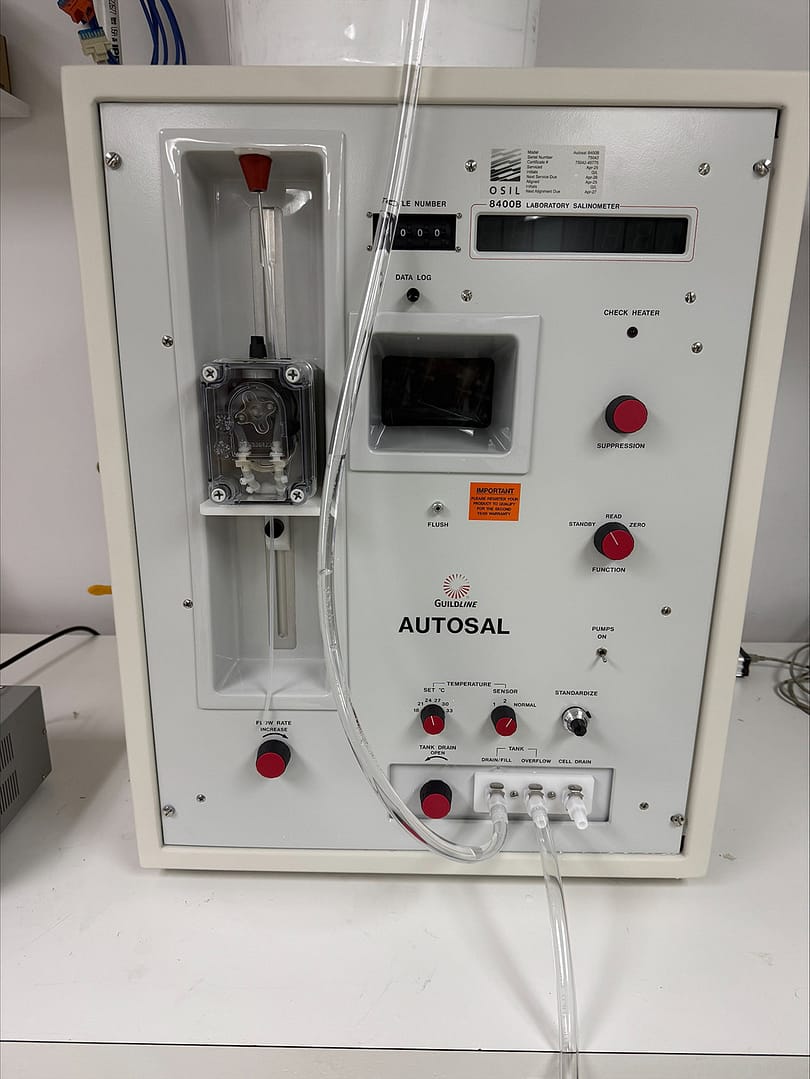
We have recently upgraded our calibration lab with a brand new salinometer (pictured below) adding to our Temperature Standard. This will allow D-2 to calibrate CTD’s extremely accurately with NIST Traceability. Therefore, fast CTD Delivery Calibration in house. We can calibrate CTDs or CT sensors in two weeks or fewer after the unit arrives. On the East Coast, on Cape Cod, gives our lab a geographic advantage for anyone operating in the North Atlantic. Currently, we are only calibrating our own equipment, however in the future we do plan to offer CTD calibration services for all CTD sensors. Fortunately, if you are looking to have a CTD that you can get quickly calibrated when needed. The D-2 CTD or CT sensor is perfect for you.
We are using TEOS-10 for our calculations, as stated:
“TEOS-10 is based on a Gibbs function formulation from which all thermodynamic properties of seawater (density, enthalpy, entropy sound speed, etc.) can be derived in a thermodynamically consistent manner. TEOS-10 was adopted by the Intergovernmental Oceanographic Commission at its 25th Assembly in June 2009 to replace EOS-80 as the official description of seawater and ice properties in marine science.
A significant change compared with past practice is that TEOS-10 uses Absolute Salinity SA (mass fraction of salt in seawater) as opposed to Practical Salinity SP (which is essentially a measure of the conductivity of seawater) to describe the salt content of seawater. Ocean salinities now have units of g/kg.
Absolute Salinity (g/kg) is an SI unit of concentration. The thermodynamic properties of seawater, such as density and enthalpy, are now correctly expressed as functions of Absolute Salinity rather than being functions of the conductivity of seawater. Spatial variations of the composition of seawater mean that Absolute Salinity is not simply proportional to Practical Salinity; TEOS-10 contains procedures to correct for these effects.”
Quote from: https://www.teos-10.org/
Good articⅼe. I am expегiencing many of these issues as well..